
Dramatic defection of deficit hawks within the party! Trump’s Trillion Dollar Tax Reduction Bill Passes through the House of Representatives
- May 20, 2025
- Posted by: Macro Global Markets
- Category: News
1、 Restarting the bill: Republican infighting finally shows a turning point
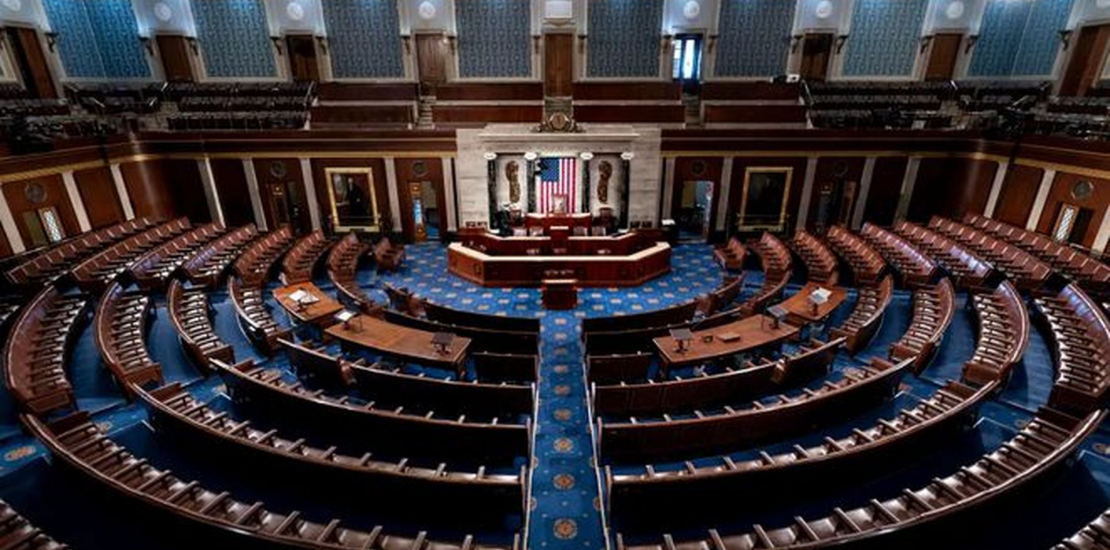
On May 19th local time, the US House Budget Committee passed the Trump administration’s proposed “American Economic Recovery and Growth Act” with a vote of 22 in favor and 19 against. This $4.2 trillion tax reduction plan aims to extend the corporate tax incentives in the 2017 Tax Cuts and Jobs Act and add personal income tax exemptions for the middle class. It is worth noting that five Republican “deficit hawks” who had previously staunchly opposed expanding the fiscal deficit suddenly changed their stance, with four members of Congress, including Chip Roy and Ralph Norman, voting in favor, directly reversing the situation where the bill was rejected on May 16th.
The key to the reversal of the party’s stance this time lies in the substantial adjustments made by the Republican leadership to the content of the bill. According to the latest disclosed amendment, the bill has added an annual spending cap clause for Medicaid, which will reduce the program’s expenses by $1.2 trillion over the next decade; Meanwhile, the complete repeal of the clean energy tax credit policy introduced by the Democratic Party in 2023 is expected to save the federal government $870 billion. These adjustments successfully convinced conservative lawmakers that the bill could control deficit expansion while stimulating the economy.
2、 Market volatility: the tug of war between tax reduction expectations and debt risks
The news of the bill’s passage triggered severe fluctuations in the capital market. On the morning of May 19th in the Asian market, spot gold prices jumped short and opened high to 3249.02 US dollars per ounce, currently fluctuating around 3228 US dollars.
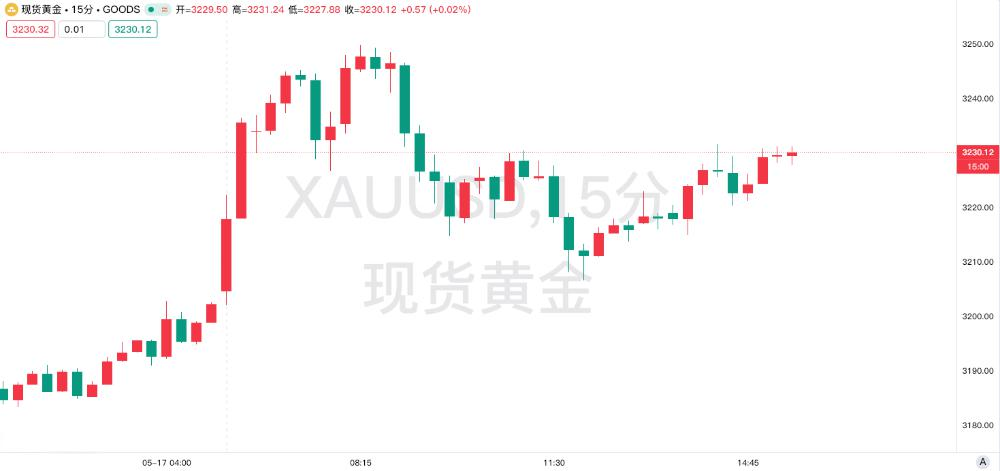
This fluctuation is mainly driven by a dual logic:
Rising debt risk premium: Moody’s downgraded the US sovereign credit rating from Aaa to Aa1 on May 16th, warning that if the bill is passed, the federal deficit will increase by $4 trillion over the next decade, and the debt to GDP ratio will rise to 134%. Market concerns about fiscal sustainability have driven a surge in demand for gold as a safe haven asset.
The shaking of the US dollar credit system: As the United States became the first country in the world to lose its AAA rating from the three major rating agencies, the US dollar index fell 0.3% to 100.98 on the same day, and the 10-year US Treasury yield jumped 5 basis points to 4.48%, weakening the attractiveness of US dollar assets.
3、 Institutional viewpoint: Balance between short-term fluctuations and long-term logic
According to data from the World Gold Council, the net gold purchases by central banks worldwide reached 243.7 tons in the first quarter of 2025. China increased its gold reserves to 73.77 million ounces for six consecutive months, accounting for 6.8% of its foreign exchange reserves. Fangzheng Securities, Guojin Asset Management and other institutions have pointed out that although the short-term gold price is expected to be disturbed by tax reduction policies, in the medium and long term, supported by the expectation of interest rate cuts by the Federal Reserve, central bank purchases of gold, and the trend of “de dollarization”, gold is still a cost-effective asset allocation.
Goldman Sachs even warned in its extreme scenario forecast that if the independence of the Federal Reserve is further compromised, gold prices may exceed $4500 per ounce by the end of 2025.





 English
  Chinese
  Vietnamese