
Trump’s’ Liberation Day ‘tariff policy ruled unconstitutional, global trade pattern faces restructuring
- May 30, 2025
- Posted by: Macro Global Markets
- Category: News
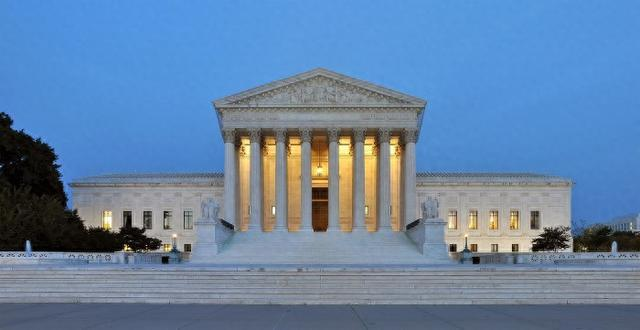
On May 28th local time, the US International Trade Court made a historic ruling, determining that the Trump administration’s “Liberation Day” tariff policy announced on April 2nd exceeded its authority, and ruling that the president has no right to impose comprehensive tariffs on trading partners. This ruling not only directly impacts the foundation of US trade policy, but also triggers a chain reaction among global trading partners, with major economies such as the European Union and Mexico launching retaliatory tariff plans. Affected by this, spot gold prices in Asia opened lower on May 29th, plummeting $30 to $3261.27 per ounce, hitting a new low since May 22nd. The US dollar index soared to 99.98, causing severe fluctuations in global financial markets.
1、 Legal ruling: the ‘fatal blow’ to the legality of tariff policies
The US International Trade Court has explicitly stated in its ruling that the Trump administration’s use of the International Emergency Economic Powers Act (IEEPA) to impose tariffs goes beyond the authority granted to the President by the Constitution, and Congress is the only body authorized to formulate trade policies. The court believes that a trade deficit itself does not constitute a national emergency, and the president has no authority to unilaterally launch a global trade war on this grounds. This is the first major legal challenge to Trump’s tariff policies, and if the ruling is ultimately upheld, it will directly undermine the core foundation of his trade protectionism policies. Although the Trump administration has filed an appeal and requested the Federal Circuit Court of Appeals to suspend the ruling, the court has given the executive branch up to 10 days to stop imposing tariffs, significantly reducing policy uncertainty in the short term.
2、 Global response: risk of trade partner ‘uprising’ escalating
EU: retaliatory tariffs on the line
The European Commission has initiated legal proceedings to impose tariffs on US goods, intending to implement reciprocal countermeasures on US agricultural products, industrial equipment, and other goods worth 95 billion euros. German Economy Minister Habermann stated that the United States’ attempt to reshape trade rules through unilateral tariffs has violated international law, and the European Union will firmly defend its own interests. Previously, Trump’s threat to impose a 50% tariff on EU goods has led to a widespread decline in European stock markets, with France’s CAC40 index and Germany’s DAX index both falling by over 1%.
Mexico: Double Counterattack of Law and Economy
The Mexican Ministry of Foreign Affairs announced that it will file a complaint with Canada to the WTO, requesting a ruling that the US tariff policy violates international trade rules. At the same time, the Mexican Ministry of Economy has formulated a list of exported goods to the United States, proposing to impose 15% -25% tariffs on American agricultural products, automotive parts, etc., involving a trade volume of over 20 billion US dollars. Mexican President Lopez emphasized that “we will not sit idly by and watch the United States disrupt the stability of the North American supply chain, and will take all necessary measures to protect our own industries.
China urges US to return to multilateral framework
The spokesperson of the Chinese Ministry of Commerce stated that China has always opposed unilateralism and protectionism, and urged the US to respect the rule of law and international trade rules. Although this ruling does not directly involve tariffs on China, analysts point out that if the legal basis of US trade policy is shaken, it may create new opportunities for Sino US economic and trade negotiations.
3、 Gold market: Risk aversion sentiment recedes
Price collapse and capital withdrawal
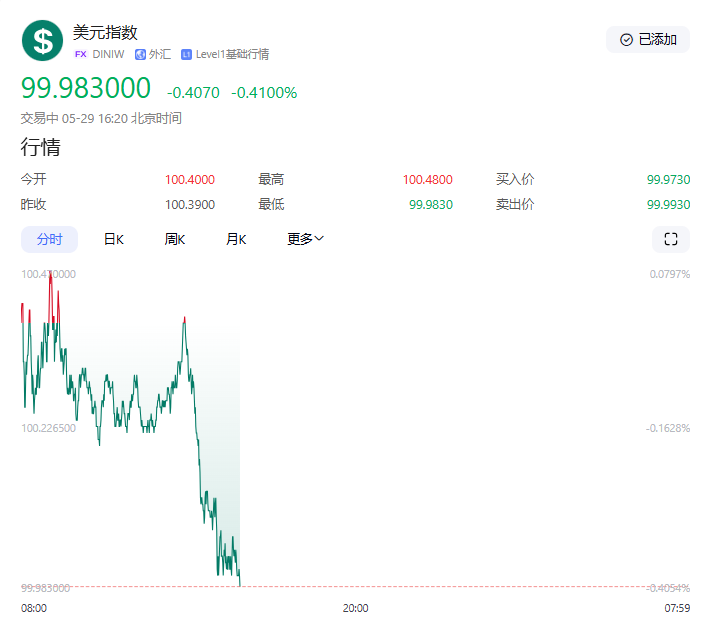
The news of the suspension of tariff policies has led to a rapid recovery of market risk appetite, and funds have accelerated their withdrawal from safe haven assets such as gold. On the morning of May 29th in Asia, spot gold opened below the $3300/ounce mark, hitting a low of $3261.27/ounce, a sharp drop of $30 or 0.91% from the previous trading day’s closing price. Trading volume surged 219000 to 455000, reaching a new high in nearly a month. At the same time, the US dollar index surged 0.35% to 99.90, and the US Treasury yield climbed to 4.45%, further suppressing the attractiveness of gold.
4、 Subsequent risks: Policy fluctuations and geopolitical black swan
The Trump administration’s legal counterattack
Although the Trump administration has filed an appeal, legal experts point out that if the Federal Circuit Court of Appeals upholds the original ruling, Trump may instead invoke Section 301 of the Trade Act or push for congressional legislation in an attempt to bypass constitutional restrictions and restore tariff policies. The repeated implementation of such policies may trigger severe market volatility.
Geopolitical uncertainty
The situation in the Middle East remains tense, and Israel’s military operations in Gaza and Iran’s uranium enrichment activities may still ignite the need for safe haven at any time. In addition, the escalation of the Russia-Ukraine conflict, changes in the situation on the Korean Peninsula and other geopolitical risk points may be the trigger for the rebound of gold prices.
The legal crisis of Trump’s “Liberation Day” tariff policy not only triggers a drastic adjustment in the gold market, but also has the potential to reshape the global trade landscape. The current market has entered a bearish dominant stage, and operations should follow the trend and wait for opportunities to rebound and short sell. At the same time, we need to be vigilant about the uncertainty brought by geopolitical and policy changes, and strictly set stop losses to protect the safety of our principal. In the coming week, investors need to focus on the US core PCE price index, speeches by Federal Reserve officials, and developments in the Middle East situation, which will determine the short-term direction of the gold market.


 English
  Chinese
  Vietnamese