
Federal Reserve hawks warn of inflation risks, gold under pressure but long-term support remains
- June 9, 2025
- Posted by: Macro Global Markets
- Category: News

1、 Two senior officials of the Federal Reserve release tough signals
On June 6th local time, Federal Reserve Governor Michelle W. Bowman and Kansas City Fed President Jeffrey Schmid delivered speeches respectively, clearly recognizing inflation as the “number one threat” to the current economy. Kugler pointed out that the Trump administration’s tariff policies have had a substantial impact on prices, and it is expected that inflationary pressures will continue to worsen in 2025. She emphasized that despite signs of a slowdown in the labor market, the risk of inflation still outweighs the risk of employment decline, and supports maintaining current interest rates unchanged. Schmid warned that if core inflation fails to continue falling back towards the 2% target, the Federal Reserve may need to take more aggressive policy measures.
This statement echoes the remarks made by Federal Reserve Governor Christopher Waller on June 2nd. Waller stated at the time that tariff policies may become the main factor driving up US inflation, and their impact may be concentrated in the second half of the year. The intensive statements from multiple high-ranking officials indicate that concerns about inflation within the Federal Reserve have significantly escalated, and the market’s game over expectations of interest rate cuts has intensified.
2、 The interweaving of multiple factors affects the trend of gold prices
Hawkish rhetoric strengthens suppression of the US dollar
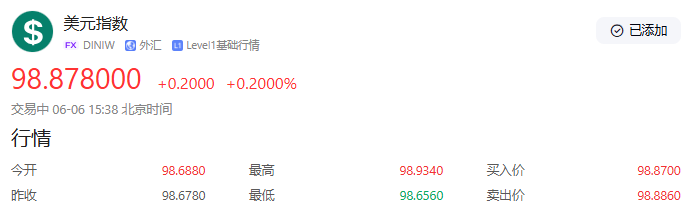
The tough stance of Federal Reserve officials has driven the short-term strength of the US dollar index, putting direct pressure on gold priced in US dollars. However, the long-term weakening trend of the US dollar has not changed – the US dollar index has fallen by 8.57% since 2025, reflecting market concerns about US debt and trade policies.
The dual risks of tariffs and inflation
Kugler made it clear on June 6th that he has seen the actual impact of high tariffs on inflation and expects this trend to continue in 2025. The Trump administration previously threatened to impose a 50% tariff on the European Union, which was postponed until July 9th. However, policy uncertainty continues to drive up business costs and exacerbate inflation expectations. Historical data shows that for every 1 percentage point increase in tariffs, the core PCE price index in the United States may rise by 0.2-0.3 percentage points, which is a long-term positive for gold’s anti inflation properties.
The game of expected interest rate cuts and policy differentiation
Despite the hawkish signals from the Federal Reserve heating up, the market is still betting on a 56.9% probability of a rate cut in September. The European Central Bank announced a 25 basis point interest rate cut to 2.0% on June 6th and hinted that the easing cycle may come to a halt. The divergence of monetary policies between Europe and the United States may lead to a short-term strengthening of the US dollar, but the long-term low interest rate environment still provides support for gold. According to data from the World Gold Council, global central bank gold demand increased by 12% year-on-year in the first quarter of 2025, with countries such as China and India increasing their holdings for the sixth consecutive month.
3、 Institutional perspectives and risk warnings
Goldman Sachs’ latest report points out that despite the hawkish stance of the Federal Reserve putting pressure on gold prices, the “triple support” of global central bank gold purchases, geopolitical risks, and damage to US dollar credit still maintains the gold price target at $3700 per ounce by the end of 2025. Metals Focus predicts that global central bank gold purchases will reach 1000 tons this year, the second highest in history, and this trend will provide structural support for gold prices. However, some analysts warn that if the Federal Reserve delays interest rate cuts or tariff policies ease beyond expectations, gold prices may face a 2% -3% pullback pressure.

Risk Warning: Policy Shift Risk: If the Federal Reserve’s June interest rate meeting releases a more hawkish signal, it may lead to a daily fluctuation of gold prices exceeding $50. Data uncertainty: If the evening non farm payroll data deviates significantly from expectations (market expectation of 130000 new jobs added), it may trigger concentrated liquidation of gold long or short positions. Sudden changes in the geopolitical situation: geopolitical events such as the Russia-Ukraine conflict and the Middle East situation may change the market sentiment at any time and boost the demand for gold as a safe haven.
The inflation warning from senior officials of the Federal Reserve has suppressed the trend of gold in the short term, but the long-term impact of tariff policies, global central bank purchases of gold, and expectations of interest rate cuts still provide a solid foundation for gold prices.



 English
  Chinese
  Vietnamese