
Trump’s tariff cap extended to August 1st! 14 countries including Japan and South Korea face a minimum tax rate of 25%, with geopolitical risks resonating with the gold market
- July 8, 2025
- Posted by: Macro Global Markets
- Category: News
1、 Trump announces tariffs on 14 countries, with Japan and South Korea bearing the brunt
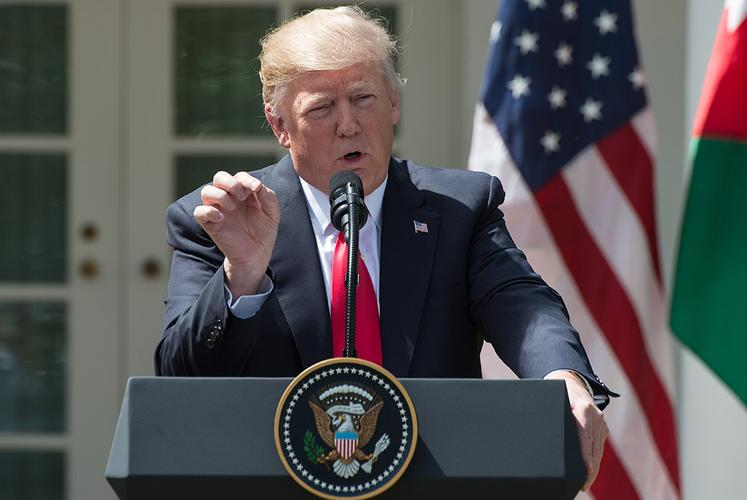
On July 7th local time, US President Trump announced that tariffs ranging from 25% to 40% will be imposed on imported products from 14 countries including Japan and South Korea starting from August 1st. At the same time, he signed an executive order to extend the “equivalent tariffs” originally scheduled for July 9th to August 1st. According to the letter released by Trump, countries such as Japan, South Korea, and Malaysia will be subject to a 25% tariff, South Africa and Bosnia and Herzegovina will be subject to a 30% tariff, Indonesia will be subject to a 32% tariff, Thailand and Cambodia will be subject to a 36% tariff, and Laos and Myanmar will be subject to up to 40% tariffs. Trump emphasized that if retaliatory tariffs are imposed by relevant countries, the United States will “increase the burden equally” and encourage companies to build factories in the United States to avoid tariffs.
2、 The global trade pattern is facing restructuring, and the cracks within the European Union are deepening
This tariff adjustment is a continuation of the Trump administration’s “reciprocal tariff” policy. Since the start of negotiations in April, the United States has only reached preliminary agreements with the United Kingdom and Vietnam, while progress in negotiations with major trading partners such as the European Union, Japan, and South Korea has been slow. The attitude towards the United States within the European Union is divided: German Chancellor Merkel calls for a compromise as soon as possible to avoid a manufacturing shock, while French President Macron insists on the “zero to zero” tariff principle and warns that countermeasures will be taken. South Africa questions US trade data, Brazilian President Lula criticizes Trump for being “extremely irresponsible,” while the Chinese Ministry of Foreign Affairs emphasizes that “there are no winners in a trade war.
3、 Federal Reserve Policy Expectations and Market Game
The market’s expectation of the Federal Reserve’s monetary policy has become a key variable in the short-term volatility of gold. Although the strong non farm payroll data in June weakened expectations of a rate cut in July, the market still generally expects the Federal Reserve to initiate a rate cut in September, with a cumulative two rate cuts of 50 basis points each time this year. If the June meeting minutes released on Thursday send a dovish signal, the US dollar may further weaken, pushing gold to break through the key resistance of $3350 per ounce. On the contrary, if the minutes emphasize inflation risks, gold may face technical pullback pressure.
4、 Structural changes and long-term logic
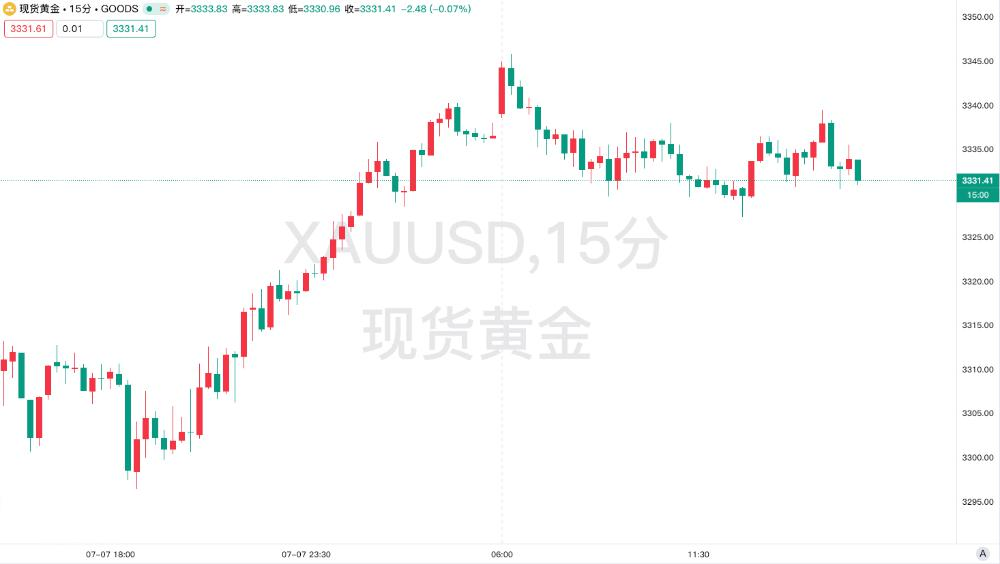
Since 2025, the gold market has shown a pattern of “shrinking consumption and expanding investment”. On the morning of July 8th in the Asian session, the spot price of London gold opened at $3338 per ounce, reaching a high of $3345.83 per ounce during the session, rebounding nearly $49 from the previous day’s low of $3296.50 per ounce, with an increase of 1.28%.
In the first quarter, global gold mine production increased by only 0.5% year-on-year, while the inflow of gold ETFs reached 226 tons, driving investment demand to increase by 170% year-on-year. The demand for gold jewelry in traditional consumer countries such as China and India has decreased by 32%, but the proportion of investment demand has jumped from 18% in 2024 to 34%, accelerating the strengthening of gold’s financial attributes. In addition, the position of the US dollar as a global reserve currency is being challenged, and officials such as European Central Bank President Lagarde have called for the promotion of the euro replacing the US dollar, a trend that has long been favorable for gold.





 English
  Chinese
  Vietnamese