
Trump announces a 35% tariff on Canada and plans to implement universal tariffs, causing another ripple in the global trade landscape
- July 11, 2025
- Posted by: Macro Global Markets
- Category: News
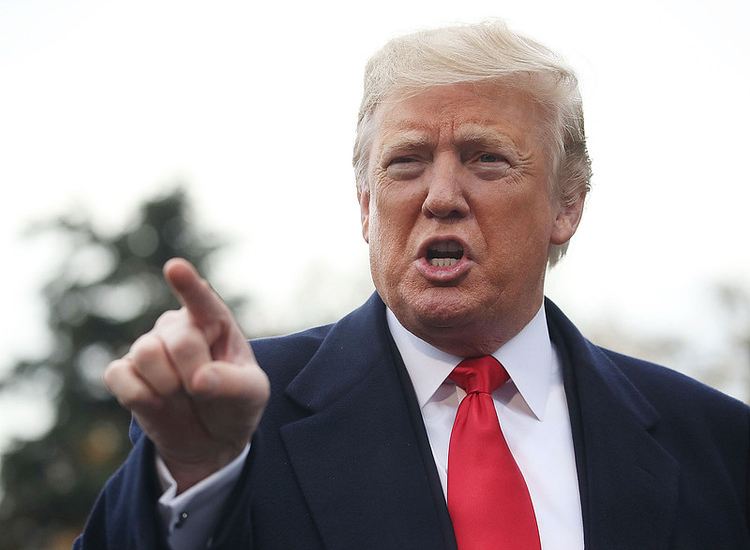
On July 10th local time, US President Trump announced on social media that he would impose a 35% tariff on goods imported from Canada starting from August 1st. This is another major trade policy adjustment by the Trump administration, following the 25% -40% tariff imposed on 14 countries including Japan and South Korea on July 7th. In a letter to Canadian Prime Minister Carney, Trump accused Canada of “taking retaliatory tariff measures” and emphasized that this tariff is independent of all industry tariffs. If Canada does not cooperate to prevent fentanyl from flowing into the United States, tariffs may be further increased. At the same time, Trump revealed in an interview with NBC that he plans to impose a unified tariff of 15% -20% on countries that have not yet received tariff letters, and the global trading system is facing a “tariff storm” of comprehensive upgrading.
1、 The historical and current contradictions in the US Canada trade dispute
The trade friction between the United States and Canada has a long history. In February 2025, Trump imposed a 10% tariff on Canadian energy products and a 25% tariff on steel and aluminum products in March, resulting in retaliatory tariffs by Canada on $29.8 billion worth of American goods. The trigger for the 35% tariff this time was Canada’s imposition of a digital services tax on American technology companies, which Trump called a “direct attack on the United States” and unilaterally terminated all trade negotiations. Data shows that Canada’s trade surplus with the United States will reach $102.3 billion in 2024, with energy exports being the core source of the surplus. The United States accounts for 75.9% of Canada’s total exports, and the two economies are highly interdependent.
Analysts point out that Trump’s move is both a response to Canada’s retaliatory tariffs and a continuation of his “America First” trade policy. According to data from the US Department of Commerce, the US goods trade deficit expanded by 12% year-on-year in the first quarter of 2025. Trump attempted to reduce the deficit through tariffs, but this move may lead to increased global supply chain costs and exacerbate inflationary pressures.
2、 The global trading system is facing a ‘paradigm shift’
Trump’s tariff policy this time presents two major characteristics: first, comprehensiveness. In addition to Canada, tariff letters have been sent to 23 countries, involving key areas such as copper, pharmaceuticals, and semiconductors. Among them, a 50% tariff is imposed on copper, and up to 200% tariff is imposed on pharmaceuticals.
The second is mandatory, requiring countries to complete negotiations before August 1st, otherwise they will face higher tax rates. Brazil and other countries have clearly stated that they will take reciprocal countermeasures. Although the World Trade Organization (WTO) has ruled that the steel and aluminum tariffs during the Trump era were in violation, the current dispute settlement mechanism is paralyzed due to US obstruction, and the binding force of international rules has been greatly weakened.
The United Nations Conference on Trade and Development warns that if major economies continue to adopt tariff countermeasures, global trade costs may increase by 15% by 2025, and end consumer prices may rise by 0.7% -1.2%, which will directly impact corporate profits and consumer confidence.
3、 The gold market under the shock wave of tariffs
1. The surge in safe haven demand drives up gold prices
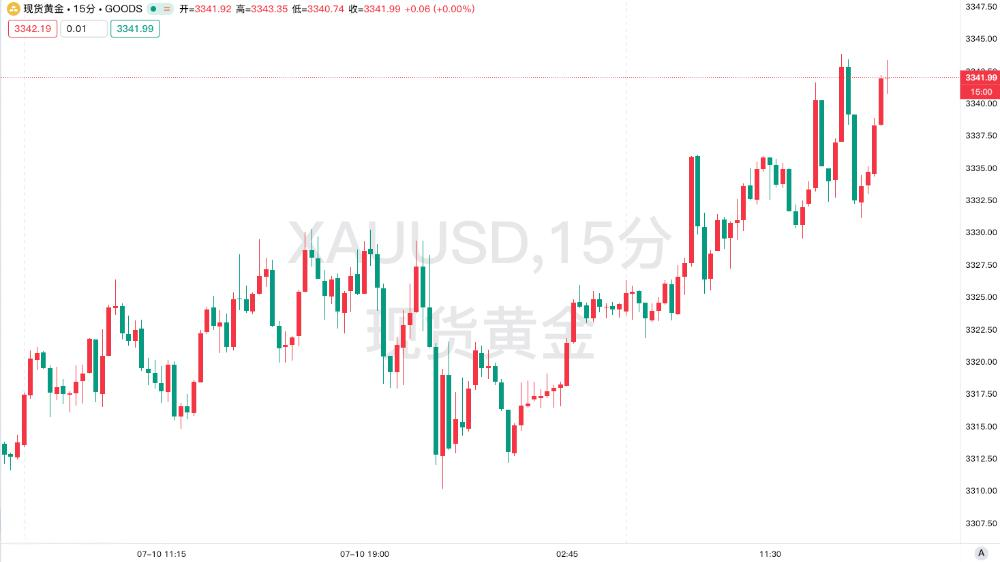
The trade uncertainty caused by tariff policies directly stimulates safe haven buying of gold. On July 11th in the Asian session, spot gold prices were trading around $3341 per ounce, up 0.5% from the previous day and reaching a new high in nearly two weeks.
2. Monetary policy differentiation strengthens the value of gold allocation
The minutes of the Federal Reserve’s June meeting showed significant divergence among officials on the outlook for interest rates, with 10 expected to cut rates twice this year. However, Minneapolis Fed President Kashkari warned that tariffs could delay the time for US inflation to fall back to 2% by 6-12 months, suggesting that the rate cut may be reduced to 50 basis points.
3. Structural demand provides long-term support
Global central bank gold purchases continue to provide bottom support for gold. In the first four months of 2025, central banks bought 256 tons of net gold, and the People’s Bank of China increased its holdings of gold for eight consecutive months. By the end of June, the reserves had reached 73.9 million ounces (about 2298.55 tons).
The market generally believes that the negotiation window before the tariffs take effect on August 1st is crucial. If Canada takes reciprocal countermeasures or other countries follow up with retaliation, global trade tensions may escalate into a “tariff spiral”, and the value of gold as a “crisis pricing tool” will be further highlighted. Investors need to closely monitor the statement on the path of interest rate cuts at the FOMC meeting in July, as well as the breakthrough of the US dollar index at the key resistance level of 97.5. These variables will determine the boundary of the short-term volatility range for gold.

 English
  Chinese
  Vietnamese