
The “Golden Moment” of Financial Markets: A Symphony of Trade Policy, Economic Data and Gold Prices
- May 6, 2025
- Posted by: Macro Global Markets
- Category: News
Recently, the gold market has presented a complex pattern under the interweaving of multiple factors such as policies and economic data. On the one hand, the gold price has remained stable to a certain extent; on the other hand, the market is full of cautious optimism and potential uncertainty about the future trend of gold.
Behind the stability of the gold market: the dual influence of policies and data
On Wednesday, spot gold prices continued to fluctuate in a narrow range, falling below $3,310 per ounce. Market concerns about trade policies have eased, limiting the upward momentum of gold. At the same time, the US trade policy actions have sent a “cooling” signal to the market. Trump signed two executive orders on Tuesday, aiming to ease the impact of the previous automobile tariff policy on the market through tariff credits and reductions in tariffs on some materials. Although the aftermath of trade frictions is still brewing, these measures have temporarily eased the market’s anxiety about the repetitiveness of US trade policies.
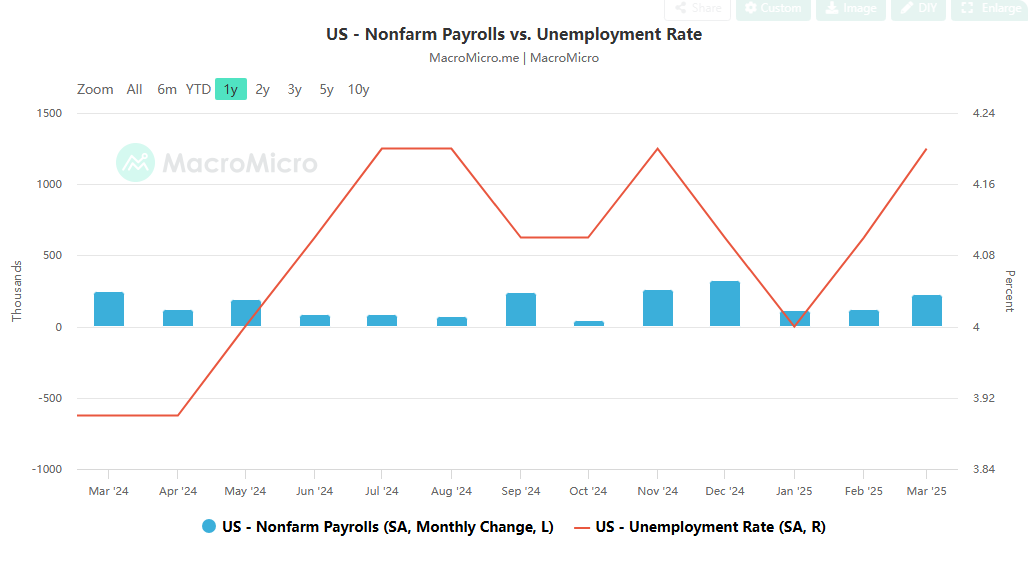
However, the complex performance of economic data has also brought new focus to the market. The US consumer confidence index fell to a nearly five-year low in April, showing the impact of tariff concerns on expectations for the real economy. Market participants are paying close attention to key US economic data to be released, including the personal consumption expenditure price index (PCE) and the non-farm payrolls report. The current interest rate futures market shows that traders expect the Federal Reserve to cut interest rates by about 97 basis points by the end of 2025, and expectations of policy easing may provide support for gold prices.
Economic data focus: the guiding role of PCE and non-agricultural
In terms of economic data, a series of data that may affect market dynamics will be released on Wednesday, including the U.S. ADP employment in April, the U.S. gross domestic product (GDP) in the first quarter, and the U.S. personal consumption expenditures (PCE) in March. The performance of these data may have a significant impact on the market.
From the perspective of the job market, the JOLTS job vacancies in the United States fell to 7.19 million last month from a revised 7.48 million in February, the lowest level since September last year. This figure shows that the demand for labor is weakening as employers put their spending plans on hold until they have a clearer understanding of Trump’s policies. However, the resignation rate rose to the highest level since July last year, indicating that the activity of the labor market has improved.
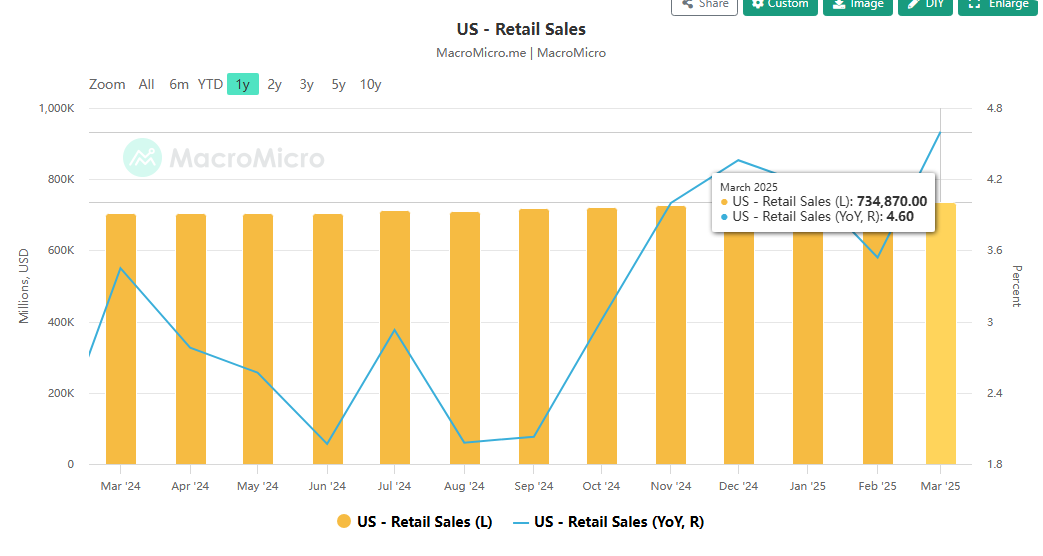
As for GDP data, the market generally expects that the US GDP growth rate will slow to 0.3% in the first quarter, which is the slowest growth since the beginning of 2022. However, some economists expect the economy to shrink, and a basic indicator of the Atlanta Fed’s GDPNow forecast currently shows that the economy will shrink by 1.5%. In addition, the US trade deficit in goods unexpectedly widened to a record level in March, indicating that the US economy suffered a major shock in the first quarter.
Nevertheless, the PCE report may not have a significant impact on the outlook for monetary policy. The median forecast of investment bank analysts based on CPI, PPI and import data shows that the month-on-month growth rate of core PCE in the United States in March is expected to slow from 0.4% last month to 0.08%, while the overall PCE fell slightly by 0.1% month-on-month, almost flat.
Long-term forecast and risk warning for gold prices
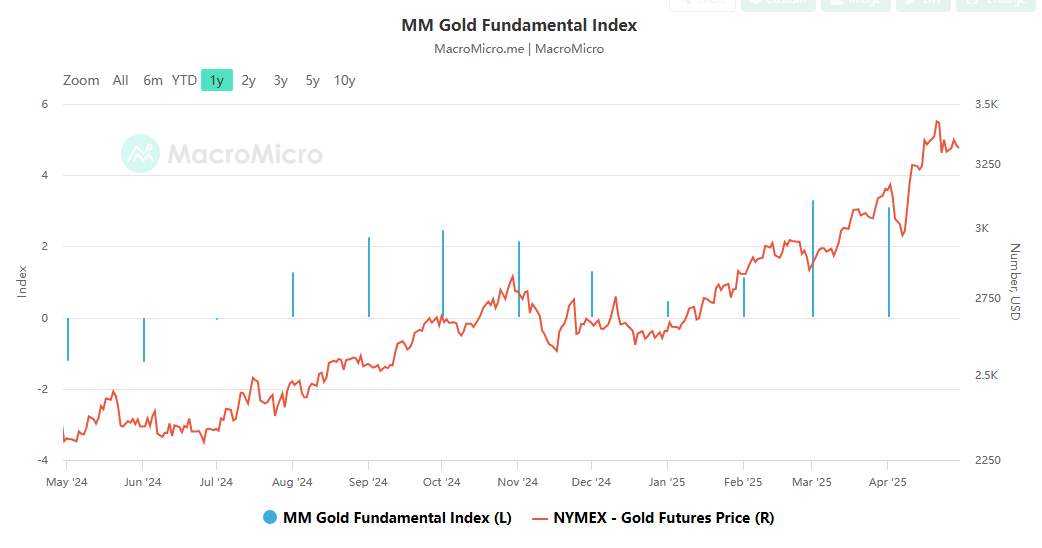
In the long term, the gold market is expected to continue to maintain strong safe-haven demand amid uncertainty, tensions and concerns about volatility in major financial markets. The World Bank significantly revised its gold forecast in its latest commodity outlook, predicting that the average price of gold will reach $3,250 per ounce this year, up 36% from last year’s average price. Looking ahead, the gold price is expected to average around $3,200 per ounce in 2026, down 1.5% from this year’s forecast.
However, if tensions and policy uncertainty become more pronounced, gold prices could exceed current forecasts. In addition, the outlook for silver is also worth paying attention to. Driven by industrial demand, the World Bank expects silver prices to average around $33 per ounce this year, up 16.7% from last year’s average price. Silver prices are expected to rise to $34 per ounce in 2026, up 3% from this year.
Market Impact and Future Outlook
If U.S. growth unexpectedly contracts, it would heighten recession fears and could push gold prices back to all-time highs. Conversely, if U.S. growth cools less than expected, it could provide a brief respite for the overall market and the dollar, allowing gold bears to take advantage of a price correction.
Regardless, traders will remain cautious and avoid making new directional bets ahead of Friday’s U.S. nonfarm payrolls data. The impact of other data will be similarly limited. The dollar remained firm as the market assessed recent tariff headlines. The executive order signed by Trump on Tuesday and discussions around progress on a trade deal between the United States and some of its Asian trading partners provided some comfort to the market.
From a technical perspective, technical indicators on the gold daily chart remain in the positive zone, which is favorable for gold bulls. If the price of gold falls below the immediate support of $3,300-3,290, it may find suitable support around $3,265-3,260. However, if it falls below the latter, the downward trajectory may extend to the 50% Fibonacci retracement level, which is the range around $3,225, leading to the $3,200 mark.
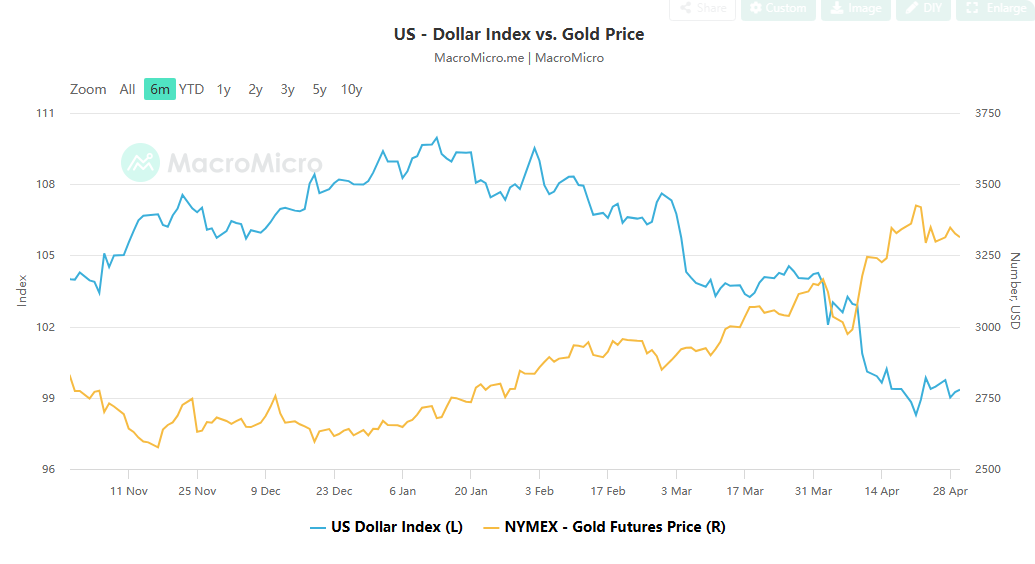
On the other hand, the Asian high near $3,328 may become an immediate obstacle for gold prices to rise. Only by breaking through this level can we expect to test the $3,348-3,353 range, followed by the $3,366-3,368 range. If this range is successfully taken, gold prices will return to the $3,400 mark. The momentum may further encounter resistance in the $3,425-3,427 area before bulls try to break through the psychological barrier of $3,500 again.
In the current market environment, gold investors need to pay close attention to the dynamics of US trade policy, economic data releases and the policy direction of the Federal Reserve. These factors will largely determine the future trend of gold prices. Although there may be fluctuations in the short term, in the long run, the value of gold as a safe-haven asset is still recognized by the market.



 English
  Chinese
  Vietnamese