
Trump pushes for Gaza Free Zone plan, Hamas rare compromise: willing to exchange power for ceasefire triggers geopolitical shock
- May 19, 2025
- Posted by: Macro Global Markets
- Category: News
1、 Background and core content of the event
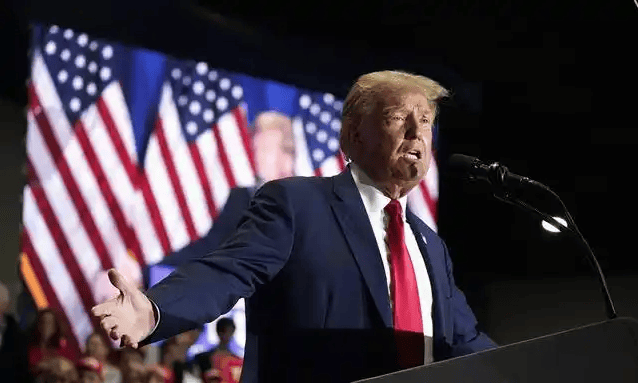
On May 15th local time, US President Trump once again proposed the plan to turn the Gaza Strip into a “free zone” at a business roundtable meeting held in Qatar, claiming that “there is nothing salvageable in Gaza” and advocating for the United States to take over the area and lead the reconstruction. At the same time, he demanded that Gaza residents relocate to neighboring countries such as Egypt and Jordan. Since its first proposal in January 2025, this plan has repeatedly sparked strong opposition from Arab countries and the international community, and has been criticized as “forcibly depriving the Palestinian people of their rights”.
In response, a senior official of the Palestinian Islamic Resistance Movement (Hamas), Bassem Naeem, stated on the same day that Hamas is in direct negotiations with the United States and is willing to relinquish control of Gaza and accept the management of the area by an independent commission if a permanent ceasefire can be achieved. Naeem emphasized that the ceasefire agreement needs to include conditions such as Israel’s withdrawal, lifting of the blockade, allowing humanitarian aid to enter, and opposing any plan to forcibly relocate residents.
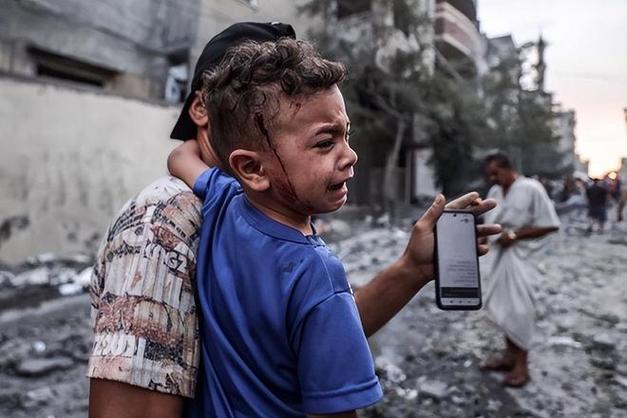
However, on the day of Trump’s statement, the Israeli Defense Forces continued to carry out intensive bombings on Gaza, resulting in at least 82 deaths, including women and children. Hamas condemns Israel’s “attempt to impose conditions in artillery fire” and points out that Israel’s military actions have resulted in over 53000 deaths in Gaza, with one-third of them being children.
2、 International reactions and geopolitical games
Arab countries and international organizations: Egypt, Jordan, Saudi Arabia and other countries have reiterated their opposition to the “Gaza Population Migration” plan, emphasizing the right of Palestinians to stay on their homeland. UN Under Secretary General for Humanitarian Affairs Fletcher criticized Israel’s blockade policy as “using hunger as a bargaining chip” and warned that about 470000 people in Gaza are facing “catastrophic hunger”.
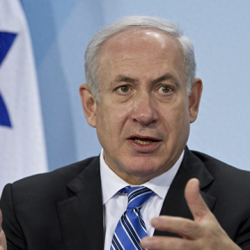
The United States and Israel: Although the White House did not directly respond to Hamas’ proposal, it emphasized that ‘Hamas needs to release all hostages and disarm first’. Israeli Prime Minister Netanyahu stated that negotiations will “advance amidst gunfire” and adhere to the goal of comprehensive control over Gaza.
EU and Russia: The EU calls for both sides to implement a ceasefire agreement, while Russia supports Palestine’s opposition to forced relocation and emphasizes that the Gaza issue needs a political solution.
3、 Analysis of the Impact on the Gold Market
Short term fluctuations: the tug of war between geopolitical risks and policy expectations
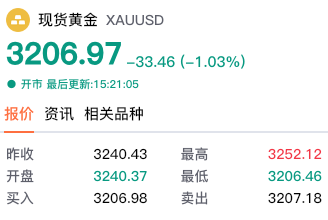
The double-edged sword effect of risk aversion: Trump’s plan and Hamas’ response have intensified the uncertainty of the Middle East situation, causing the Geopolitical Risk Index (GPR) to soar 15% in a single day, driving gold to rebound to $32552/ounce in the early session of the Asian market on May 16th, an increase of over 4% from the previous day’s low of $3120.64/ounce. However, the market’s fluctuating expectations for the ceasefire agreement have led to significant fluctuations in gold prices, with an amplitude of $125.
The suppressive effect of the US dollar and US Treasury bonds: Despite rising geopolitical risks, weak US PPI data in April (down 0.5% month on month) strengthened expectations of interest rate cuts, causing the US dollar index to fall to 100.82 and the 10-year US Treasury yield to fall to 4.435%, providing support for gold. However, the cautious stance of Federal Reserve officials on the path of interest rate cuts (such as Vice Chairman Jefferson’s statement that “policy rates are in a good position”) has limited the upward space for gold prices.
Trump’s “Gaza Free Zone” plan and Hamas’ ceasefire proposal have exacerbated the complexity of the Middle East situation, with the gold market showing high volatility in the game between safe haven demand and policy expectations.


 English
  Chinese
  Vietnamese